

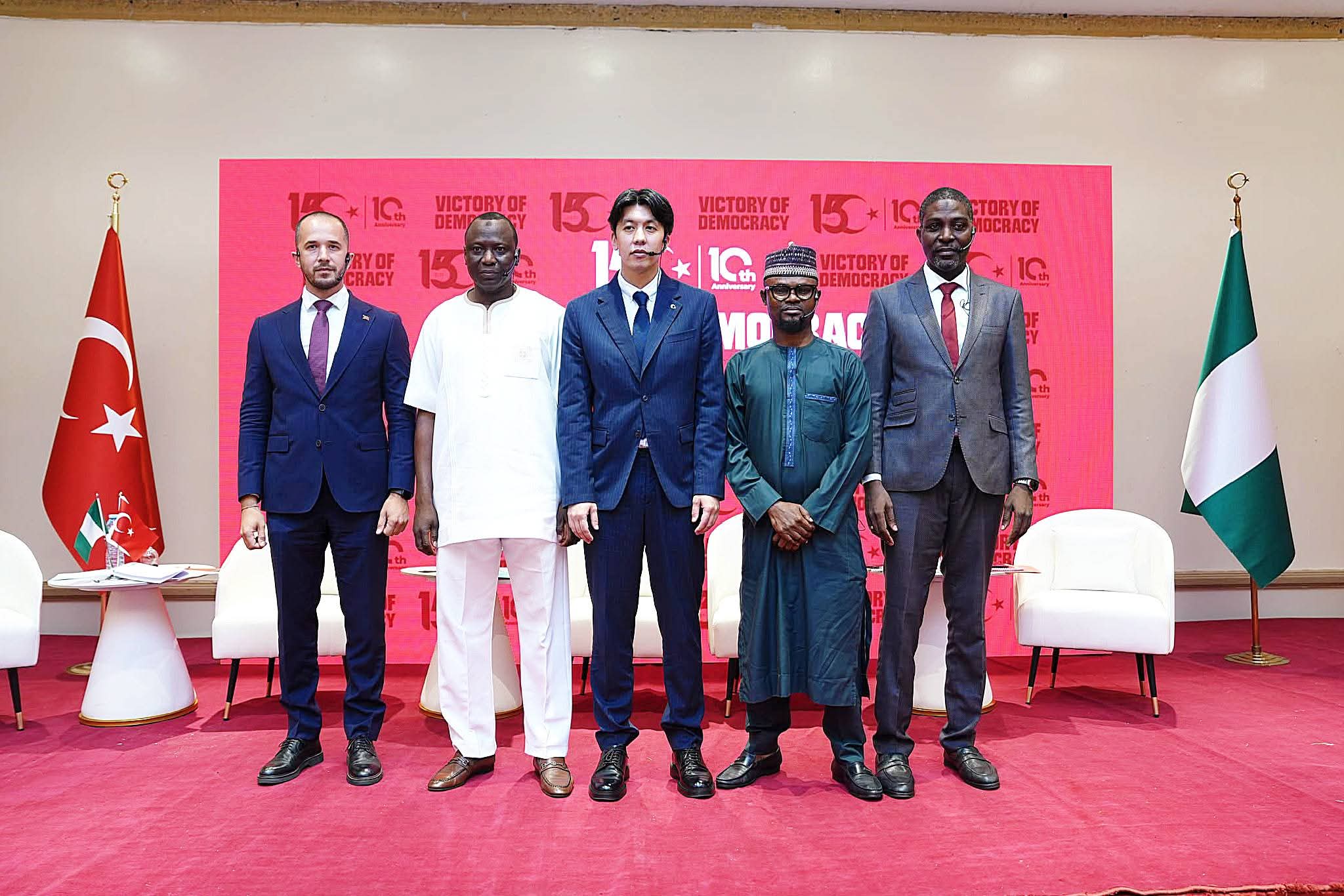
Can democracies survive the combined threats of terrorism, disinformation, violent extremism and attempts to undermine constitutional order?
That question dominated discussions in Abuja on Thursday as diplomat, academia, security and the media called for stronger democratic institutions, greater international cooperation and responsible journalism as essential pillars for safeguarding democracy in an increasingly volatile world.
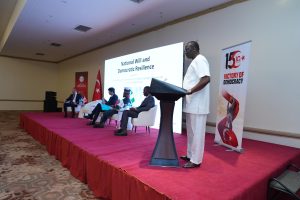
The experts spoke during an international panel discussion organised by the Presidency of the Republic of Türkiye’s Directorate of Communications to commemorate the 10th anniversary of the defeated July 15, 2016 coup attempt.
Held under the theme, “National Will and Democratic Resilience: July 15 in Its 10th Year,” the programme formed part of simultaneous commemorative events organised in Nigeria and nine other countries selected by the Turkish government.
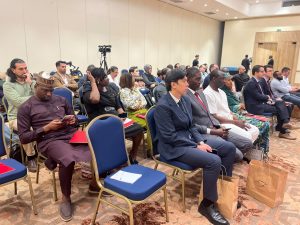
The Abuja gathering brought together diplomats, academics, journalists, policymakers, civil society representatives and security experts to examine how Türkiye’s experience could contribute to ongoing discussions on democracy, counter terrorism, responsible journalism and international cooperation.
Among the dignitaries were the Head of the Political Office of the Turkish Embassy in Abuja, Muzaffer Hakan Tok, accompanied by his wife, Sare; Counsellor for Religious Affairs, Ekrem Solmaz, and his wife, Zainab, alongside other government officials, academics and members of the diplomatic community.
Nine countries selected for global commemoration
The Abuja programme formed part of a coordinated international campaign by the Presidency of the Republic of Türkiye’s Directorate of Communications to mark the tenth anniversary of the defeated coup attempt.
Nigeria is among nine countries selected to host the global panel series designed to draw international attention to the events of July 15, Türkiye’s democratic resilience and what the Turkish government describes as the transnational terrorist network of the Fethullah Terrorist Organisation, FETÖ.
Besides Abuja, similar commemorative events are being held in Berlin, Tirana, Brussels, Sarajevo, Jakarta, Pretoria, The Hague and Bern, bringing together policymakers, journalists, academics and security experts to examine the lessons of the failed coup attempt and the importance of protecting constitutional democracy.
Photo exhibition, national anthem set the tone
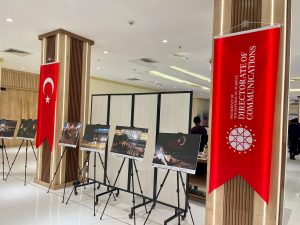
Muslim News gathered that the programme opened with a photo exhibition documenting the resistance mounted by ordinary Turkish citizens against the failed coup attempt.
The exhibition featured striking images of civilians confronting tanks, damaged government institutions and scenes that captured the determination of the Turkish people to defend constitutional order.
The formal ceremony began with the rendition of the Turkish National Anthem before participants watched a pre-recorded opening address by Türkiye’s Head of Communications, Prof Burhanettin Duran.
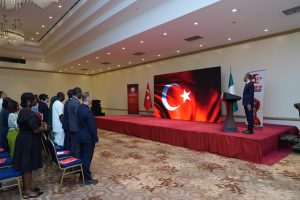
The address was simultaneously broadcast at commemorative events across all participating countries.
‘Will of the Nation, Victory of Democracy’
In his address, Duran described July 15 as one of the defining moments in Türkiye’s democratic history and unveiled the official theme for the tenth anniversary commemorations, “Will of the Nation, Victory of Democracy.”
He said the theme reflects the unity, courage and sacrifices demonstrated by the Turkish people in defending their elected government and constitutional order.
“The failed coup attempt of July 15 was thwarted under the leadership of President Recep Tayyip Erdoğan through the courage and sacrifices of our people, our armed forces and our security institutions,” Duran said.
He described the events of July 15 as “our nation’s resistance, heroism and victory.”
According to him, preserving the memory of that historic night remains essential for future generations.
He stressed that commemorating the anniversary was not merely about remembering the past but also about strengthening democratic consciousness, preserving collective memory and preventing similar threats from re emerging.
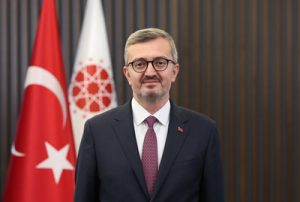
Duran also urged the media and academia to play active roles in communicating Türkiye’s democratic experience accurately to national and international audiences.
Nigeria and Türkiye share common security concerns
Moderating the discussion, researcher at the Foundation for Political, Economic and Social Research, SETA, Dr Tunç Demirtaş, described Nigeria and Türkiye as strategic partners confronting similar challenges ranging from terrorism and violent extremism to misinformation and threats against democratic governance.
He noted that bilateral relations between both countries had expanded significantly in recent years through defence cooperation, education, trade and diplomacy.
Demirtaş referred to the agreements signed during President Bola Tinubu’s recent visit to Türkiye as evidence of growing strategic cooperation.
He urged both countries to deepen collaboration in counter terrorism, institutional development and democratic resilience.
“The security threats we face today do not recognise borders. They require cooperation among governments, researchers, journalists and civil society,” he said.
Throughout the discussion, speakers agreed that military capability alone cannot guarantee national security.
Instead, they argued that resilient institutions, informed citizens, public trust and constitutional governance remain the strongest safeguards against political instability.
Citizens defeated the coup, says Gummi
President of the Türkiye Alumni Association of Nigeria, Dr Mohammed Bawa Gunmi, said the July 15 experience demonstrated the critical role ordinary citizens play in defending democratic institutions.
Although Nigeria’s security environment differs from Türkiye’s, he said valuable lessons could still be drawn from the Turkish experience.
According to Gummi, defeating terrorism requires much more than military operations.
He advocated stronger intelligence gathering, economic development, effective public communication and closer collaboration with religious, traditional and community leaders capable of countering extremist narratives at the grassroots.
He also welcomed the expanding defence partnership between Nigeria and Türkiye, describing technology transfer, military training and defence production as important areas capable of strengthening Nigeria’s security architecture.
July 15 belongs to the people, says Mahdum
Director of the Yunus Emre Institute in Nigeria, Fatih Erkin Mahdum, said the significance of July 15 extends far beyond politics.
He explained that millions of Turkish citizens from different political and social backgrounds united to defend constitutional governance, proving that democracy ultimately depends on the commitment of ordinary people.
Mahdum reiterated the Turkish government’s position that the Fethullah Terrorist Organisation infiltrated state institutions before orchestrating the attempted coup.
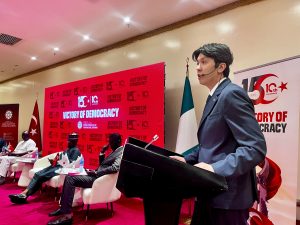
He said the reforms implemented after July 15 were designed to strengthen democratic institutions and prevent similar threats in the future.
Beyond politics and security, Mahdum highlighted the growing role of cultural diplomacy in strengthening relations between Nigeria and Türkiye.
He said the Yunus Emre Institute had continued to promote mutual understanding through language education, cultural exchanges, exhibitions and academic programmes since opening its Abuja office in 2021.
July 15 exposed media reporting gaps in Africa
The discussion later shifted to the role of the media during periods of political crisis and armed conflict, where Publisher of Muslim News Nigeria and media analyst, Rasheed Abubakar, warned that misinformation, propaganda and unverified reports can worsen national emergencies and undermine democratic institutions if journalists fail to uphold the principles of accuracy and verification.
Abubakar said the failed July 15, 2016 coup attempt exposed weaknesses in the reporting of major international developments across parts of Africa.
He explained that before the coup attempt, many Nigerian journalists possessed limited knowledge of Türkiye, largely because of the language barrier and inadequate familiarity with the country’s history, politics and society.
According to him, most Nigerian media organisations had no correspondents in Türkiye when the coup unfolded, forcing them to rely heavily on Western news agencies such as Reuters, Agence France Presse, Associated Press, BBC and CNN.
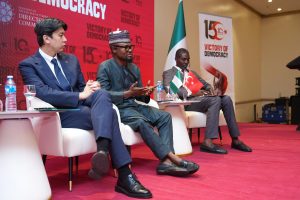
He noted that this dependence resulted in many reports relying on a single perspective while overlooking reports from Turkish media organisations such as TRT and Anadolu Agency, which many regarded merely as government sources.
“As journalists, our first responsibility is verification,” Abubakar said, adding that advances in artificial intelligence and the growing wave of digital disinformation have significantly increased journalists’ responsibility to verify information before publication.
He stressed that responsible journalism demands rigorous fact checking, multiple sourcing and strong editorial discipline, particularly during periods of conflict when false information spreads rapidly.
The media analyst also warned that terrorist organisations no longer rely solely on weapons to pursue their objectives.
“They also use propaganda, misinformation and disinformation to influence public opinion and recruit supporters. Journalists must avoid becoming channels for terrorist propaganda while ensuring that reports remain factual, balanced and responsible,” he said.
Abubakar called for stronger collaboration between Nigerian and Turkish media organisations through training programmes, professional exchanges and improved access to credible sources.
Witness recounts unforgettable night
Providing a personal perspective, Dr Zainul Abideen Jibril of Skyline University Nigeria recounted witnessing the July 15 events while studying International Relations in Bursa, Türkiye.
He recalled the uncertainty that surrounded the attempted coup as military aircraft flew overhead and reports of troop movements spread across the country.
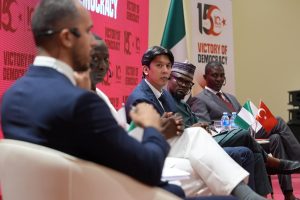
Responding to calls to defend democracy, he joined thousands of Turkish citizens who gathered in opposition to the attempted military takeover.
Dr. Jibril said seeing people from different political and social backgrounds unite in defence of constitutional order transformed his understanding of democracy.
He encouraged Nigeria and Türkiye to deepen cooperation in intelligence sharing, security research and institutional development.
Documentary brings history to life
One of the highlights of the programme was the screening of Şafak Vakti (Break of Dawn), a 2021 Turkish drama and action film that tells the real life stories of ordinary citizens who resisted the July 15 coup attempt in Istanbul.
The 96-minute production by Rafadan Hayat Film in collaboration with Turkish national broadcaster, TRT transformed historical events into compelling human stories through emotional performances that captured the courage, sacrifice and determination of ordinary citizens who confronted armed soldiers to defend democracy.
The documentary drew emotional reactions from participants, many of whom described it as one of the most memorable moments of the day’s programme. Read more HERE
A message beyond Türkiye
As participants revisited the photo exhibition after the documentary screening, conversations returned to the central question raised throughout the event: how democracies can strengthen themselves against internal and external threats without compromising constitutional order.
The consensus was clear.
The speakers agreed that Türkiye’s experience offers valuable lessons for Nigeria and other African countries confronting terrorism, insecurity and democratic challenges.
They maintained that the resilience of democracy ultimately depends not only on strong security institutions but also on informed citizens, responsible journalism, effective leadership, international cooperation and an unwavering commitment to resolving political disagreements through constitutional means rather than force.
Sponsored

Nigerian Muslim Personalities of the Year 2024/2025
Global Muslim Personalities of the Year 2024/2025




Discover more from Muslim News Nigeria
Subscribe to get the latest posts sent to your email.