

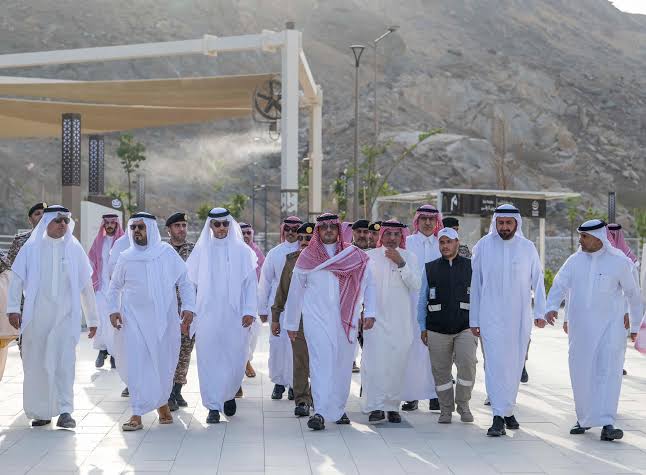
•As pilgrims prepare for Mina, Arafat rites
By Rasheed Abubakar and Abdullahi Abdulganiy
As Nigerian pilgrims join over 1.6 millions of Muslims from around the world for the commencement of the Mashair rites on Monday, May 25, 2026 (8th of Dhul-Hijjah, 1447 AH), attention has once again turned to one of the most pressing challenges of the annual pilgrimage, extreme heat and how Saudi Arabia’s extensive welfare preparations will mitigate its impact.
Muslim News gathered that the Mashair period, which covers Mina, Arafat and Muzdalifah, is widely regarded as the most physically demanding stage of Hajj. It also coincides with peak daytime exposure in the desert environment, where temperatures this year are expected to reach as high as 47 degrees Celsius.
Against this backdrop, Saudi authorities have rolled out one of the most ambitious heat mitigation and pilgrim welfare operations in recent years, covering cooling infrastructure, water supply systems, medical response units, and heat prevention advisories across Mina, Arafat, Muzdalifah and the Grand Mosque.

Cooling facilities across Mashair as first line of defence
Saudi Arabia has significantly expanded cooling facilities across the holy sites for Hajj 2026 as part of efforts to protect pilgrims from extreme desert heat during the most physically demanding days of the pilgrimage.
The Kingdom said the cooling operation spans Masjid al Haram, Mina, Arafat and Muzdalifah, with upgraded air conditioning systems, misting fans, shaded walkways, cooling canopies and heat reducing road surfaces deployed across key movement corridors used by pilgrims.
At the Grand Mosque in Makkah, authorities said the facility is operating what is described as the world’s largest cooling system, with a capacity exceeding 155,000 tons. The system runs continuously to maintain indoor temperatures between 22 degrees Celsius and 24 degrees Celsius while also improving air quality for worshippers performing Tawaf and prayers.
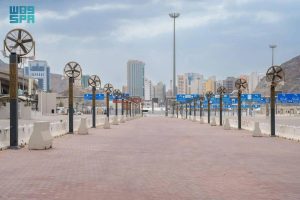
Across the outdoor Mashair sites, more than 6,000 misting columns have been installed alongside expanded shaded areas to reduce direct exposure to sunlight during peak movement hours.
In Mount Arafat, Saudi Arabia has completed the second phase of its major shading and cooling project around Jabal al Rahmah. The installation includes 21 large shade structures, UV protected canopies, cooling units and more than 100 misting fan columns spread across the vast plain to support pilgrims during the critical Day of Arafat.
In Mina, where pilgrims spend days in tented accommodation, officials confirmed that all camps are fully air conditioned, supported by more than 45,000 cooling units to maintain safer indoor temperatures despite external heat conditions.
Authorities have also introduced heat blocking road coatings in parts of Mina, designed to reduce surface temperatures by between 15 degrees Celsius and 20 degrees Celsius, easing movement between ritual sites.
In Muzdalifah and along key pedestrian routes, misting systems, shaded rest points and cooling stations have been expanded to provide relief for pilgrims during long hours of walking and gathering.

Saudi officials said all cooling facilities are being monitored through a central Supervisory Control and Data Acquisition system, which tracks equipment performance and ensures rapid response to faults, thereby maintaining uninterrupted operation across the holy sites.
Water access strengthened across holy sites
Closely tied to the cooling strategy is a massive expansion of water supply operations, which Saudi authorities say is essential for survival under extreme heat conditions.
The Saudi Water Authority has confirmed full operational readiness for this year’s pilgrimage, with water production capacity increased to more than 3.8 million cubic metres per day. This represents an 18 percent increase compared to the previous season.
Transmission capacity has also risen to over 2.3 million cubic metres per day, while storage capacity has exceeded 8.8 million cubic metres, a jump of nearly 50 percent. Distribution capacity now stands at more than 1.3 million cubic metres per day, ensuring continuous supply across Makkah, Mina, Arafat and Muzdalifah.
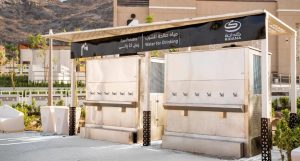
Officials said more than 4,100 facilities across the holy sites are linked to an integrated water network designed to guarantee uninterrupted access around the clock.
For pilgrims, this translates into expanded availability of chilled drinking water points, improved hydration access along walking routes, and continuous supply to tents and rest areas.
Saudi authorities emphasized that water availability remains one of the most critical components of heat survival during Hajj, particularly in Mashair where physical exertion and crowd density increase dehydration risks.
Warns pilgrims over extreme heat, issues safety guidelines
The Saudi National Centre for Meteorology has repeatedly warned pilgrims to prepare for extreme heat conditions and to strictly follow safety guidance throughout the pilgrimage.
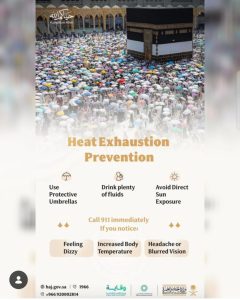
Pilgrims are advised to drink water regularly even when not thirsty, avoid prolonged exposure to direct sunlight, use umbrellas during daytime movement, and limit outdoor activity during peak heat hours.
Authorities also encouraged pilgrims to comply with crowd movement schedules and safety instructions issued by field officers, especially during transitions between Mina, Arafat and Muzdalifah.
Emergency medical support remains available, with pilgrims advised to seek immediate help through official emergency lines when experiencing symptoms of heat exhaustion, dizziness or fatigue.
The warning underscores a central reality of Hajj, that despite technological and infrastructural improvements, heat remains one of the most dangerous and unpredictable risks facing pilgrims each year.
Medical response prioritises elderly pilgrims
One of the most significant aspects of the 2026 Hajj preparations is the strengthened medical response system, with special focus on elderly pilgrims who are most vulnerable to heat stress and fatigue.
The Saudi Ministry of Health said the system includes field hospitals, mobile clinics, air ambulances, rapid response teams and advanced monitoring technologies designed to provide immediate intervention across the Mashair.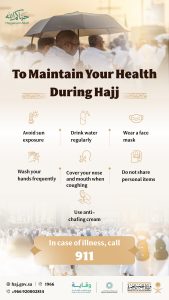
Elderly pilgrims with heart conditions and other chronic illnesses are to be monitored using smart wearable devices that track vital signs such as heart rate, blood oxygen levels and ECG readings in real time, according to the arrangement.
These devices are connected to digital monitoring centres and virtual clinics, allowing doctors to receive instant alerts and respond quickly in cases of medical distress.
To overcome crowd congestion, Saudi Arabia has also deployed medical drones and air ambulances to transport emergency medicines, laboratory samples and medical supplies between field clinics in minutes.
Field hospitals and mobile medical points have been strategically located across Mina, Arafat and Muzdalifah to provide immediate treatment for heat related illnesses, dehydration, respiratory complications and cardiac emergencies.
Saudi authorities said elderly pilgrims are also being advised to take preventive measures, including carrying prescribed medication, keeping their Nusuk cards at all times, and avoiding strenuous movement during peak heat hours.
Health experts further encouraged elderly pilgrims to consider Shariah approved alternatives for physically demanding rituals where necessary, particularly during overcrowded periods at Jamarat.

Strict access control as Saudi enforces permit policy, Nusuk card requirement for pilgrims
Saudi authorities have reiterated the strict enforcement of the “No Hajj without permit” policy, warning that only officially registered pilgrims will be allowed access to the holy sites during the Mashair period. The directive is aimed at preventing overcrowding, improving crowd control, and ensuring the safety of legitimate pilgrims throughout the rites.
In addition, pilgrims have been strongly advised to always wear and display their Nusuk cards at all times during movement across Mina, Arafat and Muzdalifah. Officials said the card remains the primary identification tool for access to services, transport systems, medical care, and security verification points across the pilgrimage routes.
Nigerian pilgrims begin movement to Mina tonight
For Nigerian pilgrims, their movement to Mina begins tonight after Isha prayer and will continue through Tuesday, May 26, known as Tarwiyah day or preparation day.
The National Hajj Commission of Nigeria (NAHCON) has directed pilgrims to strictly adhere to all operational and safety guidelines as the Mashair phase begins.
The directive was issued during a pre Hajj 2026 meeting in Makkah, where stakeholders finalized logistics for movement across Mina, Arafat and Muzdalifah.
NAHCON said the operation will run through to Tuesday, as pilgrims gradually join millions already converging in the holy sites ahead of the peak rites.
The commission warned that strict compliance with schedules, transport arrangements and field instructions remains essential to ensure safety and prevent congestion. Follow the Link to read the full story HERE
Conclusion
With millions of pilgrims moving through the Mashair, Saudi Arabia’s expanded welfare systems are providing critical operational support through enhanced cooling facilities, strengthened water supply networks and a more responsive medical system designed to reduce risks associated with extreme heat and crowd density.
Whether these measures will translate into a smoother and safer pilgrimage experience for all pilgrims will only become clear at the end of the exercise. However, the success of the entire arrangement will depend not only on the infrastructure already in place, but also on the discipline, coordination and strict compliance of pilgrims and all stakeholders with established movement schedules and safety guidelines.
Accordingly, the National Hajj Commission of Nigeria has called on Nigerian pilgrims to strictly adhere to all operational guidelines, maintain discipline during movement and comply fully with approved schedules and safety instructions throughout the Mashair rites.
Sponsored

Nigerian Muslim Personalities of the Year 2024/2025

Global Muslim Personalities of the Year 2024/2025




Discover more from Muslim News Nigeria
Subscribe to get the latest posts sent to your email.