

By Bamiro Adejoke Maryam
* Praises LGIP graduands, says programme is raising new generation of leaders
* ‘Lead beyond titles, build solutions,’ social impact expert tells cohort members
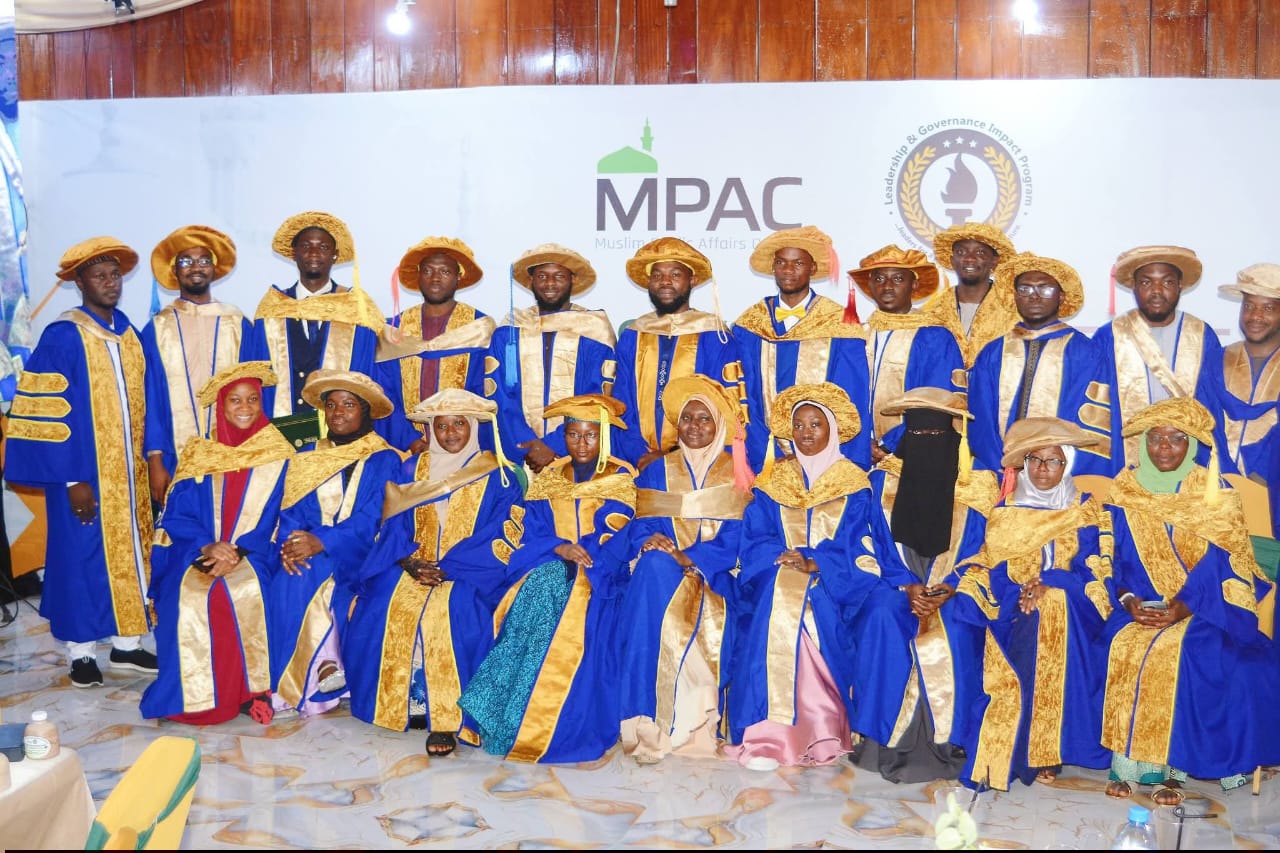
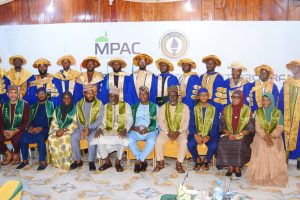
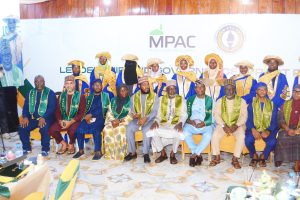
The Muslim Public Affairs Centre (MPAC) has graduated 27 Muslim professionals from the pioneer cohort of its Leadership and Governance Impact Programme (LGIP), charging them to transform their knowledge, influence and professional networks into meaningful impact across Nigeria.
The 13-week programme was designed to prepare Muslim professionals for effective engagement with Nigeria’s governance systems and equip them with the knowledge, skills and ethical framework required to contribute to the public sector, private sector, policymaking and community leadership.
The graduates, who constitute Cohort One, Class of 2026, received their certificates at a graduation ceremony held on Saturday, September 12, at the Function Hall, University of Lagos, Akoka, Lagos.
Muslim News gathered that the ceremony featured a keynote lecture by communications and social impact professional, Omodara Adediran, who challenged the graduands to look beyond professional titles and become people who actively build solutions in their communities, institutions and wider society.
‘Do not let your title become your identity’
Using the story of Prophet Musa (AS) as a central example, Adediran urged the graduands not to allow their qualifications, positions or professional recognition to become their identity.
She said leadership often requires courage, faith and the willingness to enter difficult environments without being defined by social status.
The Keynote speaker identified people who benefit from the status quo, influencers who shape public opinion and ordinary people exhausted by broken systems as some of the forces professionals would encounter.
She urged the graduating students to remain focused on their purpose, service to God and contribution to society rather than becoming distracted by these forces.
Adediran, who has more than a decade of experience across Nigeria’s private, public and development sectors, encouraged them to build strategic networks and remain professionally visible while ensuring that their credentials were matched by competence, character and useful action.
“When it becomes your identity, the problem is you have stopped believing at that point and you have started performing,” she said, warning against professional packaging without substance.
:Don’t ever be a person with a package more useful than content’
She also warned that commitment to integrity could sometimes leave professionals standing alone, particularly in environments where compromise had become normal.
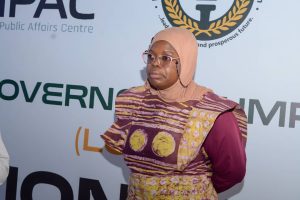
Drawing from Prophet Musa’s story, she said difficult moments should not necessarily be interpreted as failure or abandonment. “Your loneliness is not abandonment,” she said.
Adediran shared her experience of leaving the private sector to work fully in the development sector despite concerns about the financial implications, saying she made the decision because she believed her skills could be used more meaningfully to create social impact.
‘Nigeria needs builders, not just commentators’
The social impact expert prepared the graduation class for rejection, unanswered emails and failed proposals, describing them as part of the reality of pursuing social change.
She urged them not to abandon worthwhile causes simply because expected support did not come, noting that difficult circumstances could reveal abilities and solutions they did not know they possessed.
Adediran also cautioned against measuring impact by visibility or public recognition.
According to her, professionals could do meaningful work without receiving attention, while people with large social media followings could receive greater recognition despite contributing less to a cause.
The social impact expert challenged the cohort members to move beyond discussing Nigeria’s problems and become people who actively work to solve them.
She said the country’s professional class was often highly articulate when discussing national challenges but reluctant to take responsibility for addressing them.
“Nigeria’s professional class is extraordinarily articulate about problems in discussions and making noise on Twitter. But tell someone to actually champion the cause, and it’s dead silence,” she said.
Rather than merely criticising broken systems, she urged the graduates to imagine what their sectors and communities would look like if they functioned properly and begin building towards that reality. “Prophet Musa (AS) didn’t just confront, he constructed,” she said.
The keynote speaker further advised them to build a small circle of two or three trusted people who could challenge their decisions, support their growth and hold them accountable when difficult assignments test their resolve.
Adediran urged the propgramme participants to see their presence in Nigeria at this time as a responsibility and to use their skills to build the country they want to live in.
She also encouraged them to collaborate rather than pursue leadership as an individual performance, reminding them that meaningful impact often requires people who can challenge and strengthen one another.
‘Leadership gap requires preparation’
Earlier, the Executive Chairman of MPAC, Disu Kamor, said the programme was established in response to the underrepresentation of Muslims at important decision making tables despite the size, diversity and talent within the Muslim community.
He said the challenge could not be addressed through complaints alone, but through deliberate preparation and development of competent professionals capable of contributing to society.
“Today we celebrate more than certificates. We celebrate discipline. We celebrate learning. And we celebrate the deliberate, patient work of raising a new generation of leaders for our community and our nation,” Kamor said.
He said the responsibility of the graduates was to combine the confidence of their faith with the discipline required for effective governance, adding that they must become professionals who are ethical, capable and committed to serving the whole of society.
According to him, the fellowship programme was built around the belief that Muslims must be adequately prepared to participate in spaces where decisions affecting the country are made.
“That gap is not closed by grievance. It is closed by preparation,” he said.
Kamor urged the new fellows to lead with ethics and integrity, govern with knowledge and vision, and measure their leadership by the quality of service they provide.
He also challenged them to champion causes that would improve society and contribute to a new era of national leadership.
The MPAC boss reminded the graduating students that leadership should not be regarded as a trophy or reward, but as an amanah, or trust, that comes with responsibility to the people, particularly the vulnerable.
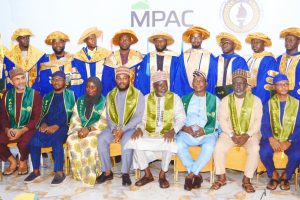
“You are the foundation of a new era of national leadership,” Kamor told the graduands, congratulating them on the successful completion of the programme.
‘Leadership and governance fellowship’
The 13-week fellowship programme exposed participants to key areas of leadership and governance, including Islamic ethics and public leadership, Nigeria’s governance architecture, policy design and implementation, public finance and accountability, media and public communications, political advocacy and youth engagement, and leadership in crisis and change.
As part of the programme, participants developed capstone projects addressing practical governance and development challenges, allowing them to apply the knowledge and skills gained during the training to real world issues.
The part-time programme was delivered virtually through weekly live sessions, group activities, assignments, field immersion, mentorship and peer engagement.
The courses were delivered by a faculty of professionals and scholars with expertise in governance, leadership, public policy, media, economics, institutional development and Islamic ethics.
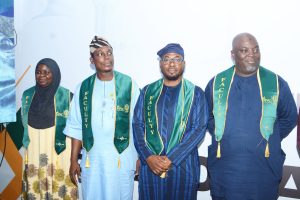
Dr Ridwan Lawal handled Foundations of Public Governance; Dr. Muiz Banire led sessions on Civic Advocacy and Mobilisation; Mr Babalola Abd Rasheed facilitated Governance and Policy Design; Mr Sulaiman Aledeh took Media and Narrative Power; Mr Abdulmalik Mahdi focused on Statecraft and Governance Ethics; and Arigbabu Sulaiman covered Policy and Social Innovation.
Mrs Oyindamola Mutiat Dada addressed Markets and Shared Prosperity; Sheikh Nurudeen Lemu delivered sessions on Islamic and Moral Leadership; Mrs Shakirah Mustapha handled Boards and Institutional Excellence; Mrs Rinsola Abiola led Diversity and Nation Building; Mr Tosin Ali Osori covered Crisis, Change and Resilience; while Mr Kola Osinowo facilitated Global and Sustainable Governance.
Speaking on behalf of the faculty and facilitators, Sheikh Nurudeen Lemu said the 13-week fellowship was designed to help develop a generation of future leaders capable of making a difference across industry, civil society, non-governmental organisations, government, academia and the media.
Lemu said the goal should not merely be personal success or recognition, but significance and lasting impact. He described leadership as an amanah and urged the graduands to remain worthy of the trust that comes with leadership positions.
“Move up the ladder at the speed of your trustworthiness, your significance and your impact,” he told them.
Lemu also stressed the importance of identifying and developing young people with leadership potential early, noting that the skills acquired through training must be sustained through continuous practice, advocacy and engagement.
MPAC builds alumni network for continued impact
For MPAC, the graduation marks the beginning of a longer journey rather than the end of the programme. The 27 graduands are expected to join an alumni network that will promote continued learning, mentorship, professional collaboration and leadership development.
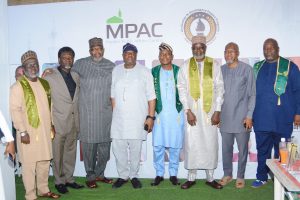
The network will organise quarterly meetups and masterclasses, while alumni will also have opportunities to support and contribute to future cohorts of the Leadership and Governance Impact Programme.
Founded in 2001 as an online initiative, the centre was formally incorporated as a public service agency in August 2002, and has since focused on advocacy, strategic media engagement, interfaith peace-building, and developing Muslim professionals.
MPAC’s sister organisation, Sakinah Medical Outreach, also grew from an internal humanitarian initiative into an independent organisation, expanding its work to provide medical support and outreach to underserved communities.
Roll call of guests
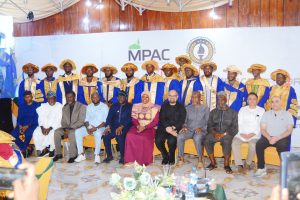
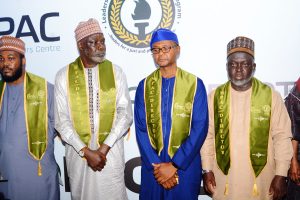
Justice of the Supreme Court of Nigeria, Justice Habeeb Adewale Abiru; Chairman of the Board of Trustees of MPAC, Mr Adesegun Ajibola, SAN; and Member of the Board of Trustees of MPAC, Alhaji Ariyo Olushekun, attended the event.
Also present were the Vice Chancellor of the African School of Economics, Abuja, Professor Mahfuz Adedimeji; former Chairman of the National Hajj Commission of Nigeria, Alhaji Zikrullah Kunle Hassan; President of the Institute of Islamic Finance Professionals of Nigeria, Professor Tajudeen Yusuf; Chief Academic and Responsibility Officer of QHSES Leadership Academy, Lagos, Engineer Jamiu Badmus; and Chairman of the Muslim Media Practitioners of Nigeria, Alhaji Abdulfatai Olajide.
Other guests included the Managing Director of Eagerly, Lagos, Hon. AbdulBaqi Ladi Balogun; Director General of the Office of Education Quality Assurance, Lagos State, Dr Sulaimon Ogunmuyiwa; Principal Partner at Adepoju and Olatunji and Co, Alhaji Nurein Olatunji; Dr Mosun Adeku, Mr Hakeem Alabi Adeku; Executive Secretary of MIND, Mr Sulaimon Olokodana; and Executive Secretary of MICA, Mr Abdulhameed Danmole.
Representing the Pakistani expatriate community in Nigeria were Mr Ahmed Akhter Qazi, Mr Abdul Basit Quraishi and Mr Kamal Ashraf.
Reports on the graduands’ experiences and the projects they presented at the graduation ceremony are published separately.
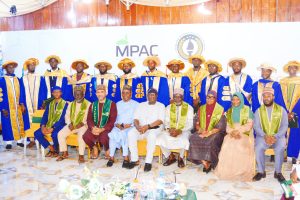
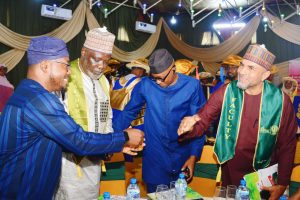
Other wonderful faces at the event
Sponsored

Nigerian Muslim Personalities of the Year 2024/2025

Global Muslim Personalities of the Year 2024/2025




Discover more from Muslim News Nigeria
Subscribe to get the latest posts sent to your email.