

By Rasheed Abubakar
* Says prosperity lies in building strong institutions, not individual success
* MSMEs contribute 48% of Nigeria’s GDP, 84% jobs, but must scale up
* New tax law offers relief, support for small and medium businesses
Mr. Fatai Folarin, a seasoned professional services leader and Chief Executive Officer (CEO) of Deloitte West Africa, has called on the Muslim Ummah in Nigeria to adopt a more deliberate, disciplined, and purposeful approach to building institutions and economic prosperity, saying sustainable success comes from collective productivity and long-term vision.
He made the call on Sunday, April 12, at the 22nd Annual Public Lecture and Luncheon of the University of Ife Muslim Graduates Association (UNIFEMGA), Lagos State chapter, held at Sheraton Hotel, Ikeja, Lagos.
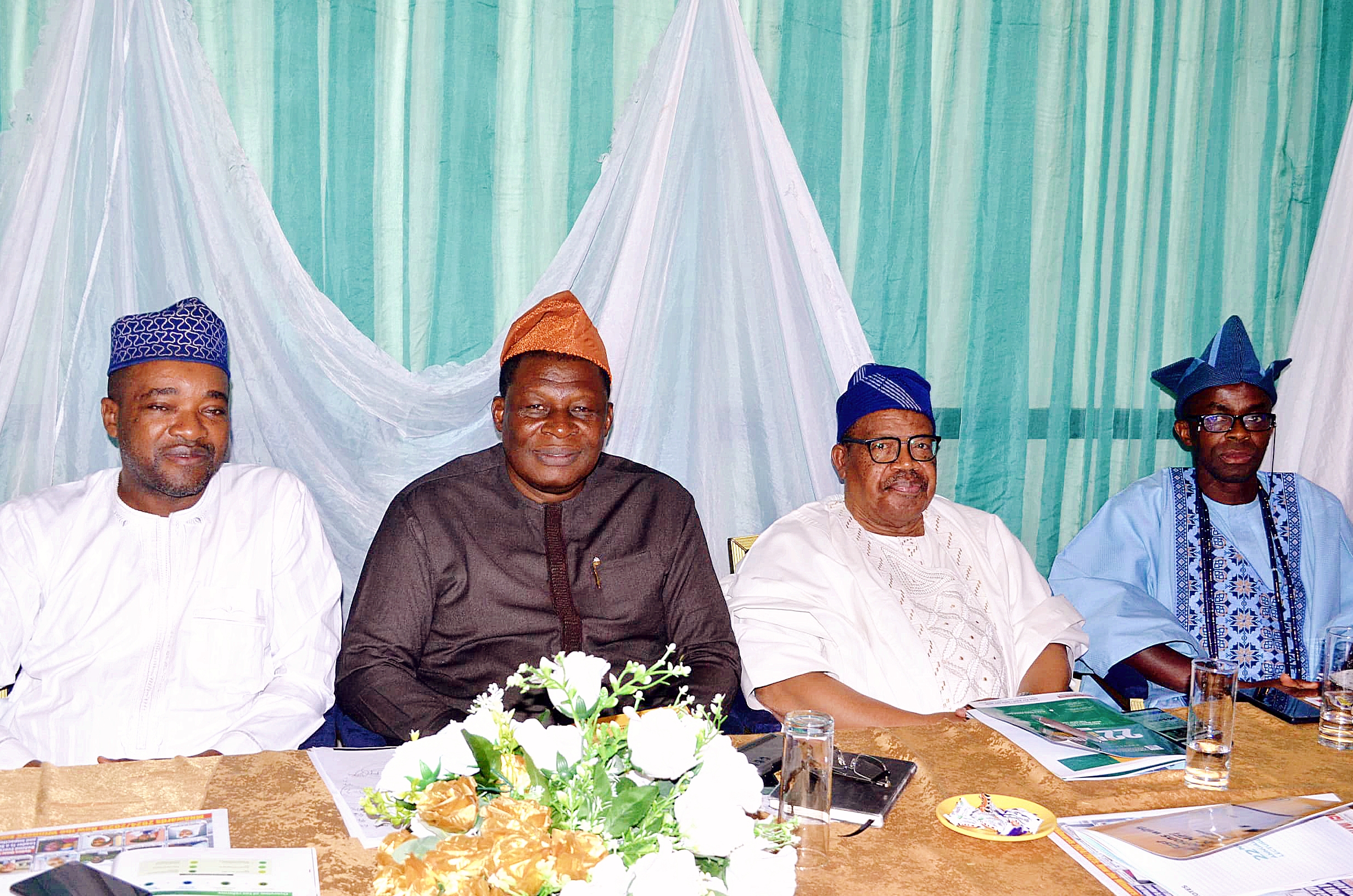
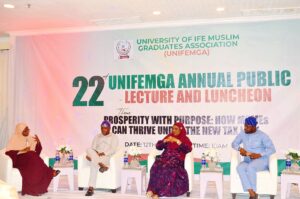
The event, themed “Prosperity with Purpose: How MSMEs Can Thrive Under the New Tax Law,” brought together alumni of the University of Ife from different sets, representatives of UNIFEMGA chapters nationwide and in the diaspora, under the chairmanship of Mr Niyi Yusuf, Chairman of the Nigerian Economic Summit Group.
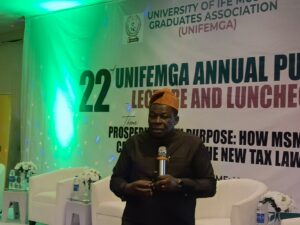
Mr. Folarin said prosperity should be measured not by individual accumulation but by the ability to build strong institutions that outlive their founders, stressing that many communities, including the Muslim Ummah, still underutilise their collective economic strength.
“For me, prosperity is to see institutions grow and to leave them bigger than what they are,” he said while addressing the gathering, which included captains of industry and owners of small and large businesses, such as the CEO of Matrix, Alhaji Aliu Abdulkabir; the CEO of Arabel, Nigeria’s leading Islamic lifestyle brand, Alhaja Shareefat Andu; and the CEO of Lotus Capital Limited, Alhaja Hajarat Adeola, who was represented by a senior executive at Lotus Capital Limited, Alhaja Karimat Toyin Kekere-Ekun.
The lead speaker Mr Folarin expressed concern that the Muslim community in Nigeria has not fully embraced intentional economic collaboration and institution-building, urging stakeholders to move from fragmentation to coordinated growth and enterprise expansion.
According to him, small and medium-scale enterprises (MSMEs) are critical to Nigeria’s economy, contributing about 48 percent of Gross Domestic Product (GDP) and employing around 84 percent of the workforce, yet many remain constrained by limited vision and scale.
He urged entrepreneurs to stop viewing MSMEs as a permanent status, describing small business as a starting point that should evolve into larger, scalable enterprises.
“We cannot continue to talk about being MSMEs. We should stop being the owner of nothing and being two percent of something,” he said.
Mr. Folarin also noted that Nigeria’s estimated 39.5 million MSMEs remain insufficient for the country’s population and economic potential, calling for more enterprise creation and expansion.
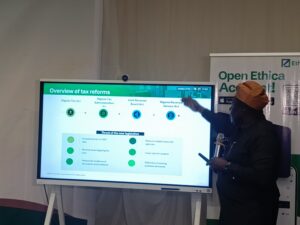
He highlighted the ongoing tax reforms introduced by the administration of President Bola Ahmed Tinubu, noting that the new tax law is designed to favour small and medium-scale enterprises by shifting focus toward higher-income earners, thereby providing relief for lower-level businesses.
The Deloitte West Africa CEO further drew from his 10 years leadership experience with the firm, stating that under his tenure, Deloitte moved from a distant third position in Nigeria’s professional services sector to a leading position through transparency, discipline, and strategic restructuring.
He said the global Deloitte network is valued at over $75 billion.
Mr Folarin emphasised strict ethical standards in financial management, noting that in over ten years he has signed or approved expenses only twice, both related to payroll, adding that accountability and integrity are essential for institutional trust.
“When everybody knows you do not touch money improperly, trust becomes the foundation of growth,” he said.
The CEO also referenced governance models in other countries, including Iran, describing how coordinated institutional structures across the executive, judiciary, and military contribute to national resilience and development despite external pressures.
He further referenced global geopolitical developments, particularly in the Middle East, using the situation in Iran to illustrate the power of collective purpose and national mindset in sustaining resilience.
According to him, the driving force behind Iran’s endurance in the face of prolonged tensions is a shared belief in national prosperity and survival, which he said has shaped the country’s policies and public behaviour.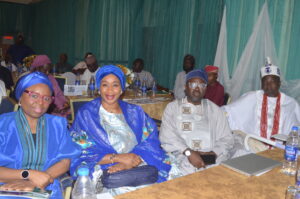
He said he studied Islamic administrative principles and applied them in corporate leadership, stressing that transparency and defined responsibilities are key to effective governance.
Mr. Folarin urged members of the Muslim Ummah to stop excessive complaints about marginalisation and instead focus on productivity, innovation, and leveraging available legal and economic systems to create prosperity.
“We complain too much in the Muslim Ummah. We need to stop complaining and start building,” he said.
Mr. Folarin further referenced historical and contemporary contributions of Muslims to global governance, science, and economic systems, citing advancements in fields such as mathematics, physics, and administrative law as evidence of a legacy of excellence.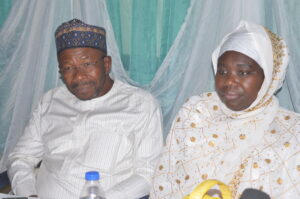
He concluded by challenging participants to reflect on their individual contributions to society, stressing that true prosperity comes from relevance, discipline, and purposeful action within their environment.
* Read tbe second part of the report HERE

Sponsored
Sponsored

Nigerian Muslim Personalities of the Year 2024/2025
Global Muslim Personalities of the Year 2024/2025




Discover more from Muslim News Nigeria
Subscribe to get the latest posts sent to your email.