
* Perpetrators remain unpunished despite Supreme Court ruling, rights groups say
Harassment and discrimination against Muslim students over the use of the hijab have persisted in Nigeria during the ongoing Unified Tertiary Matriculation Examination (UTME), despite a Supreme Court ruling affirming the rights of Muslim students to freedom of religion and to wear the hijab in public institutions without restriction.
The 2026 UTME, conducted by the Joint Admissions and Matriculation Board (JAMB), began on Thursday, April 16, with more than 2.2 million candidates taking part across 966 accredited Computer Based Test (CBT) centres nationwide.
Muslim News gathered that the board has already begun releasing early results of the examination, which is expected to conclude on Saturday, April 25. However, concerns have emerged over violations of official guidelines on religious attire at some examination centres.
Since the commencement of the examination, reports, including videos circulating on social media, have indicated that some Muslim female candidates were asked to remove their hijabs before being allowed entry into examination centres.
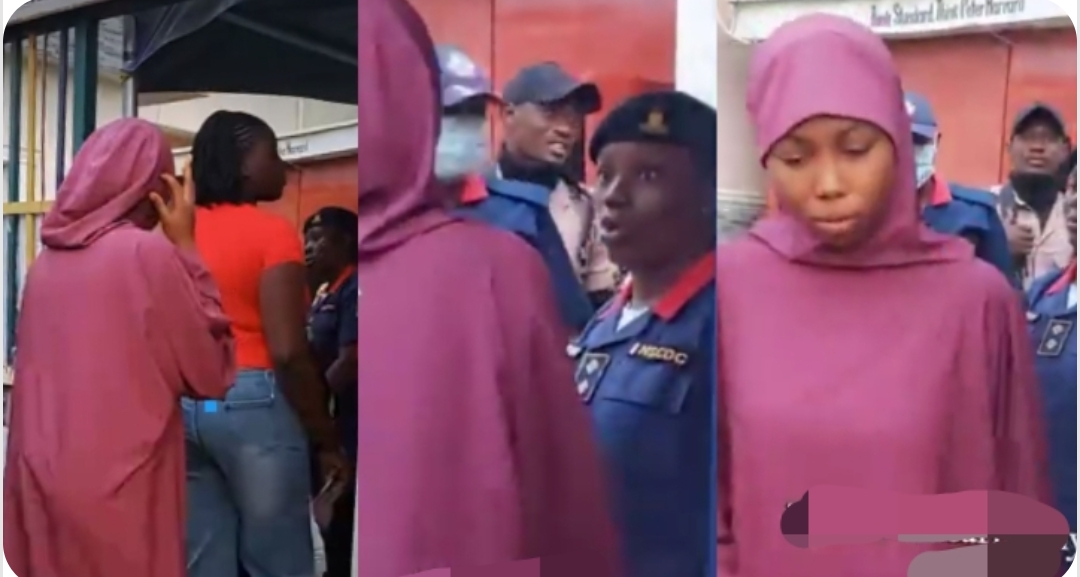
One such incident occurred at the Esther Oshikoya CBT Centre in Ibadan, Southwest Nigeria, where a candidate identified as Fatimah Salaudeen was instructed by the officials of the Nigeria Security and Civil Defence Corps (NSCDC) to remove her hijab before being admitted.
According to an official account released by the Akinyele Area Council Ibadan, of the Muslim Students’ Society of Nigeria, the candidate initially hesitated to comply, leading to a confrontation at the centre before she later removed the hijab.
A video capturing the incident later circulated widely on social media, drawing criticism from rights advocates and members of the public, and renewing concerns over the protection of candidates’ fundamental rights during the nationwide examination.
Muslim students were forced to remove their hijab before sitting for the #UTME at Esther Oshikoya CBT Centre in Ibadan, Oyo State.
The incident, captured on camera, has sparked outrage, with many describing it as a violation of religious freedom and a breach of @JAMBHQ guidelines pic.twitter.com/yjiqqFfO2j— Muslim News Nigeria (@muslimnews_NG) April 16, 2026
In a separate incident, another video surfaced online showing a security official with the NSCDC also preventing a modestly dressed Muslim student from entering an examination hall at Peter Harvard International School in Kubwa, Abuja.
According to reports shared on social media, the candidate was allegedly denied entry because of her attire, while other candidates were allowed into the hall without objection.
Another Muslim student was denied entry to sit for the #UTME at Peter Harvard Schools CBT Centre, Abuja, because of her Islamic dressing.
When will #JAMB officials stop denying these innocent girls access to Uexams because of their hijab?#JAMBExams #Hijab #naijatrends #naija pic.twitter.com/zWhrkJumE3
— Muslim News Nigeria (@muslimnews_NG) April 17, 2026
Nigerian human rights groups, including the Muslim Public Affairs Centre (MPAC), Hijab Rights Advocacy Initiative (HRAI), Muslim Rights Concern (MURIC) and members of the public, condemned the incident and called on examination authorities to sanction officials found culpable.
Kamor Disu, Executive Chairman of MPAC Nigeria, described the action as unlawful and contrary to JAMB guidelines, which allow candidates to sit examinations in modest religious attire, including the hijab, subject to standard security checks.
The organisation said the incident caused distress to candidates at a critical stage of their academic pursuit, adding that students should not face embarrassment or exclusion on the basis of their faith or mode of dressing.
HRAI, led by its Director Hajia Mutiat Orolu-Balogun, also called on JAMB to take stronger action over the reported incidents, urging the examination body to sanction officials found culpable.
The group alleged that personnel of the NSCDC, deployed as ad hoc staff for security and logistics purposes during the examination, are often implicated in denying entry to Muslim female candidates wearing hijab, causing delays and, in some cases, preventing them from sitting for examinations.
In Nigeria a lady is free to walk around naked, but you’re not free to cover your body!🤦
The hypocrisy is Alarming 🤷 pic.twitter.com/WSJ0vRImJh— Abdul M Y (@abdulrazakmuhd4) April 18, 2026
It added that JAMB cannot fully distance itself from such actions, arguing that adequate training and clear briefing of ad hoc staff on their responsibilities and limits appear insufficient, a situation it said has been recurring annually.
The organisation also criticised what it described as the absence of clear and accessible official communication from JAMB on examination rules and guidelines through its website and verified social media platforms, saying this gap may contribute to inconsistent enforcement and alleged abuses at examination centres.
MSSN, an umbrella body of Muslim students in Nigeria, also condemned the harassments and called on the examination board to delist the centre and sanction erring staff.
The Lagos chapter of the group, which previously secured a Supreme Court judgment in favour of the hijab wearing, said such incidents should not recur following the SC ruling that permits hijab use in government institutions and on official uniforms.
In a statement issued on Sunday, April 19, the Amir of the group in Lagos, Mal. Kamoldeen Abiona, said its officials would be deployed to various examination centres to monitor conduct and ensure compliance with established guidelines.
Update: Esther Oshikoya CBT Centre, Ibadan, has now allowed hijab and niqab wearing UTME candidates into the exam hall after earlier concerns.
This progress shows the power of raising awareness and speaking with one voice. #JAMB #UTME #HijabRights pic.twitter.com/ukz1RlCkFh
— Muslim News Nigeria (@muslimnews_NG) April 16, 2026
JAMB intervenes after hijab-related incident at CBT centre in Ibadan
In a response, JAMB said it intervened immediately after being alerted to the incident, attributing the action to an “overzealous ad hoc staff member” who acted outside approved guidelines.
In a statement signed by its spokesperson Fabian Benjamin, the Board said no candidate should be required to remove or alter her hijab, stressing that the incident did not reflect its official policy.
The Board reiterated that it respects the religious rights of all candidates and said examination officials had been reminded of the approved screening procedures.
JAMB registrar Oloyede visits Ibadan CBT centre over hijab controversy
More details:https://t.co/X3EINByjYm pic.twitter.com/erfmOAgfnV
— Intel Region (@IntelRegion) April 18, 2026
JAMB Registrar Prof. Is-haq Oloyede was also seen in a video circulating online visiting the centre and faulting officials for asking candidates to remove their hijab.
Previous examination cycles also marked by hijab restrictions
Similar incidents have also been reported in previous examination cycles, including cases in Lagos State where Muslim candidates alleged they were asked to remove hijabs before sitting for examinations.
In 2025, Muslim candidates faced restrictions at the Caleb University CBT centre in Ikorodu, Lagos State, where female candidates were required to remove their hijabs. JAMB later described the incident as a misguided and unilateral action by an “overzealous staff”, stating that the despicable act was contrary to its policy.
In 2024, similar incidents were reported at Duntro High School, Ijeshatedo, Surulere, Lagos, where Muslim students were forced to remove head coverings before being allowed into examination halls.
Lagos center stops hijab-wearing students as #UTME commences
1. A female Muslim student has narrated how she was allegedly asked to remove her hijab at a center in Lagos where she had gone to write Unified Tertiary Matriculation Examination (UTME). @JAMBHQ @mpacng @hijabnigeria pic.twitter.com/T9Q194xSIK
— Muslim News Nigeria (@muslimnews_NG) April 21, 2024
Renewed calls for sanctions over hijab discrimination during examinations
Many of the reported incidents have occurred in Southwest Nigeria, where Muslims are estimated to account for about 60 per cent of the population. Despite the region’s reputation for relative interfaith harmony, rights advocates say repeated incidents and the absence of sanctions against those responsible have heightened concerns over accountability.
Calls by human rights organisations for sanction of culpable centres have intensified, with advocacy groups urging the examination body to delist centres where discriminations against Muslim candidates have been reported. This, they said will ensure accountability for the officials involved.
MURIC, one of the groups that reacted to the latest incident, called for disciplinary action against the centres, ad hoc staff and security personnel involved in acts of hijab related discrimination.
Professor Ishaq Oloyede is the Registrar of the national JAMB board.
He is a professor of Islamic Studies from the University of Ilorin.
Since the day a hijab-wearing student was prevented from entering the JAMB examination hall, he personally went to the location, and the… pic.twitter.com/AvQFHXE9lQ
— Abubakar Yunusa (@Pharmacio001) April 19, 2026
In a statement issued on Saturday, MURIC Executive Director Ishaq Akintola said centres where such incidents occur should be delisted, arguing that operators must be held responsible for the actions of their staff.
The group said the repeated incidents underscore the need for accountability and respect for the rule of law, warning that failure to address such violations could undermine confidence in the fairness of the examination process.
MURIC added that it was considering legal action against individuals or institutions found culpable, describing such measures as necessary to deter future violations and ensure the protection of Muslim candidates’ religious rights.
The group also urged the government to address what it described as a pattern of religious profiling, adding that it intends to report documented cases of violations of Muslim students’ religious rights to the National Human Rights Commission and international bodies, including the United Nations.
Sponsored
Sponsored

Nigerian Muslim Personalities of the Year 2024/2025
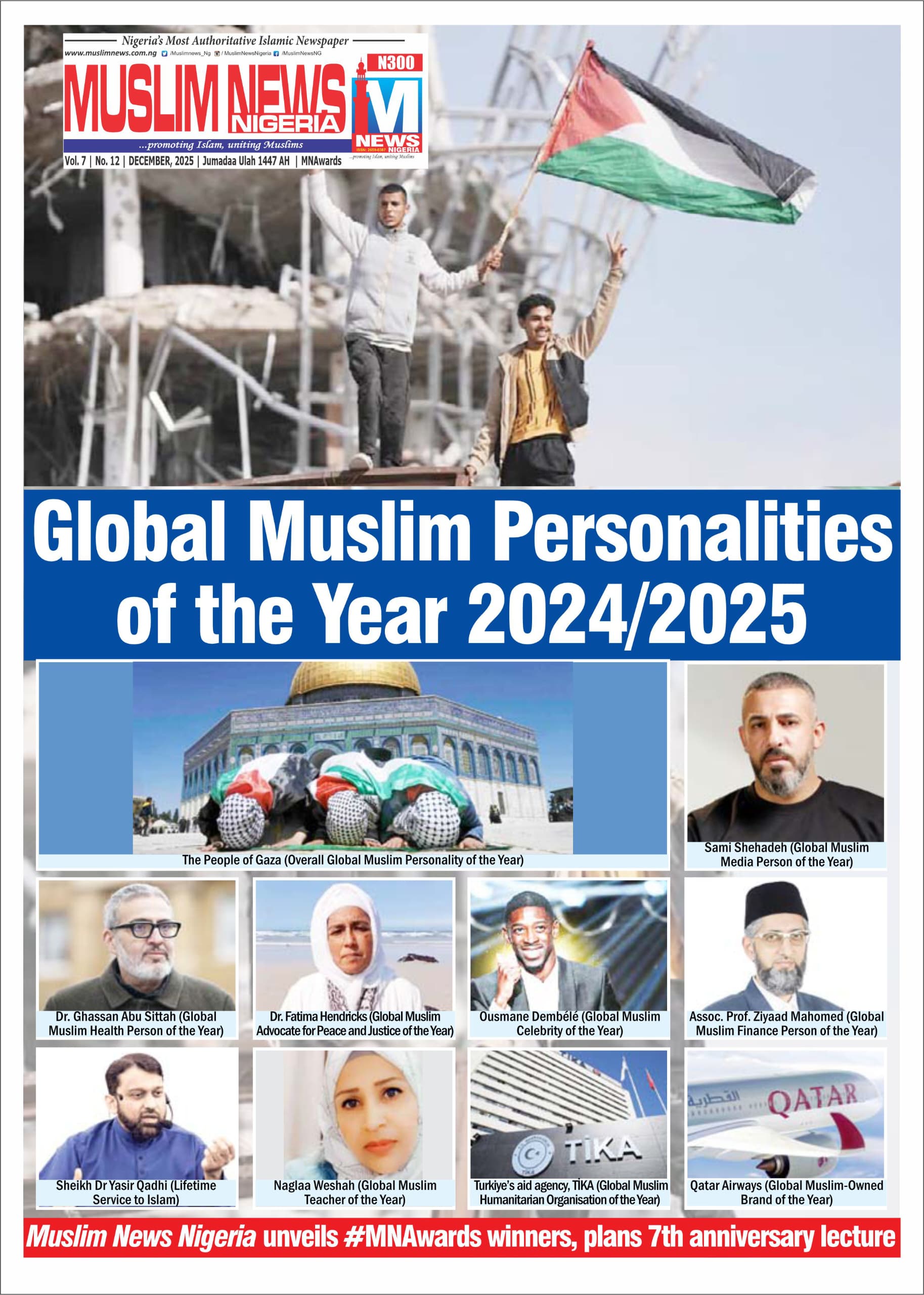
Global Muslim Personalities of the Year 2024/2025



Discover more from Muslim News Nigeria
Subscribe to get the latest posts sent to your email.