

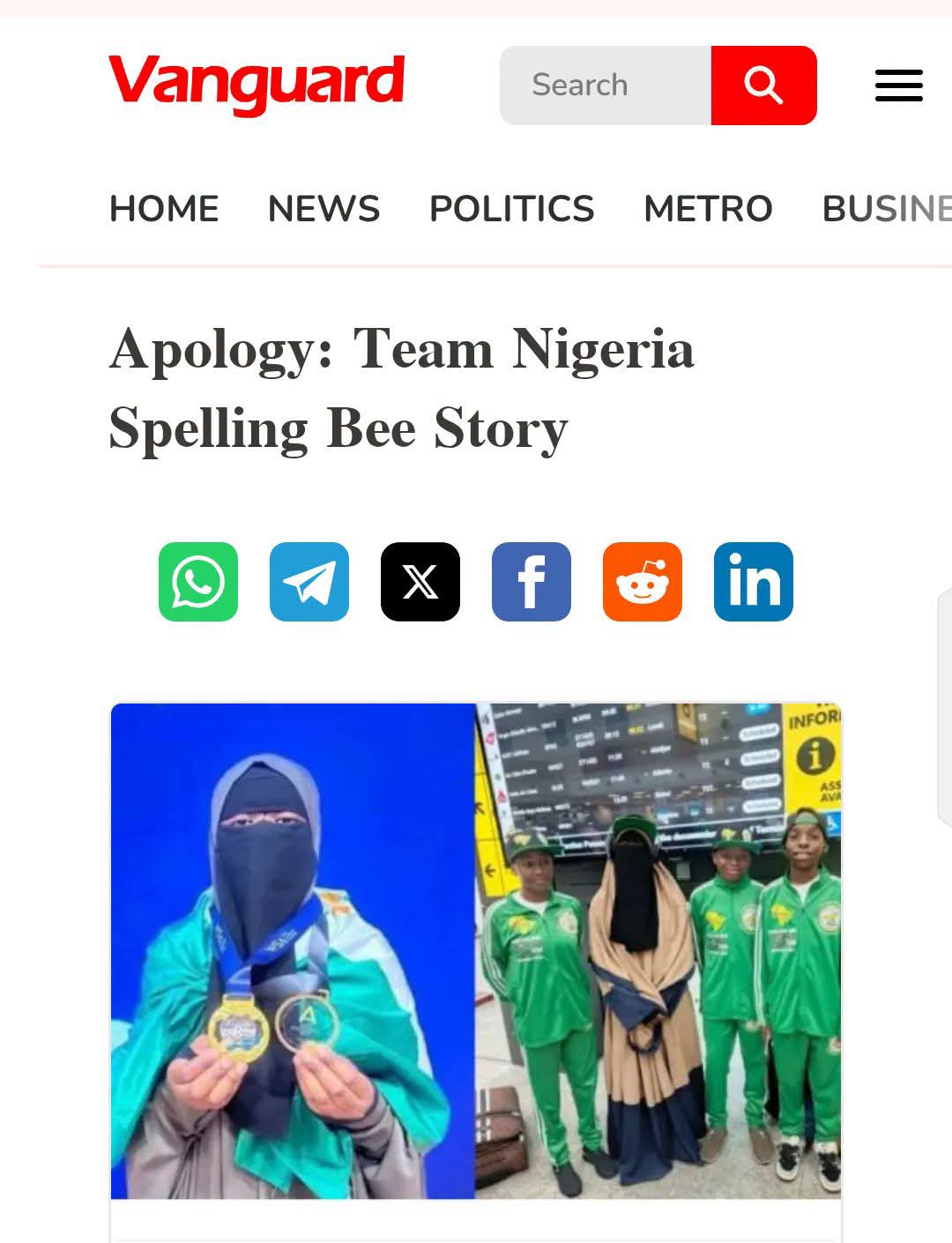
Vanguard Media Limited has issued an unreserved apology over its publication of an AI altered image of Nigerian student, Maryam Yusuf, in a report celebrating Team Nigeria’s victory at the 2026 Spelling Bee World Cup in China.
In a statement published on Thursday titled “Apology: Team Nigeria Spelling Bee Story,” the newspaper admitted that its July 21, 2026 report, “Nigerian Students Champions at 2026 Spelling Bee World Cup in China,” was inadvertently illustrated with an incorrect AI edited image.
The media organisation said it acted immediately after being notified of the error by removing the altered image and replacing it with the correct photograph approved by the complainants.
“We sincerely regret the error and tender our unreserved apology to Miss Maryam Yusuf and Mrs. Waliyah Adekunle Akeju-Ahmed for the incorrect facial representations contained in the earlier version of the report. We regret any inconvenience or distress this may have caused,” Vanguard stated.
The newspaper also reaffirmed its commitment to the highest standards of accuracy and responsible journalism.
The apology follows public criticism over the newspaper’s use of an AI edited version of Maryam Yusuf’s photograph in which her niqab was digitally altered, sparking concerns about media ethics, religious representation and the responsible use of artificial intelligence in journalism.
The 14-year-old niqabi, Maryam Yusuf, who led Team Nigeria to victory at the 2026 Spelling Bee World Cup in China, was among the four Nigerian pupils who represented the country at the global competition.
A student of Ar-Raheem International School, Ilorin, Maryam and her teammates emerged champions in the Middle School category, winning international recognition for Nigeria.
The original image of the Nigerian team, first published by other media organisations before their departure for China, showed Maryam wearing her niqab in accordance with her religious beliefs.
However, Vanguard’s version featured an AI altered image that changed her facial appearance and removed the niqab, prompting widespread condemnation from members of the Muslim community, media observers and civil society groups.
Critics argued that digitally modifying a subject’s religious appearance without consent amounted to a misrepresentation of her identity and raised broader ethical questions about the use of artificial intelligence in news reporting.
Muslim News Nigeria was the first media organisation to publish a detailed report on the controversy, describing the AI alteration of Maryam Yusuf’s niqab as a violation of journalistic ethics and urging media organisations to respect the religious identity and constitutional rights of individuals in their coverage.
With its latest statement, Vanguard has acknowledged the mistake, restored the original photograph and apologised to those affected, bringing an end to a controversy that reignited conversations about media responsibility, religious sensitivity and the ethical use of emerging technologies in journalism.
Sponsored
Sponsored

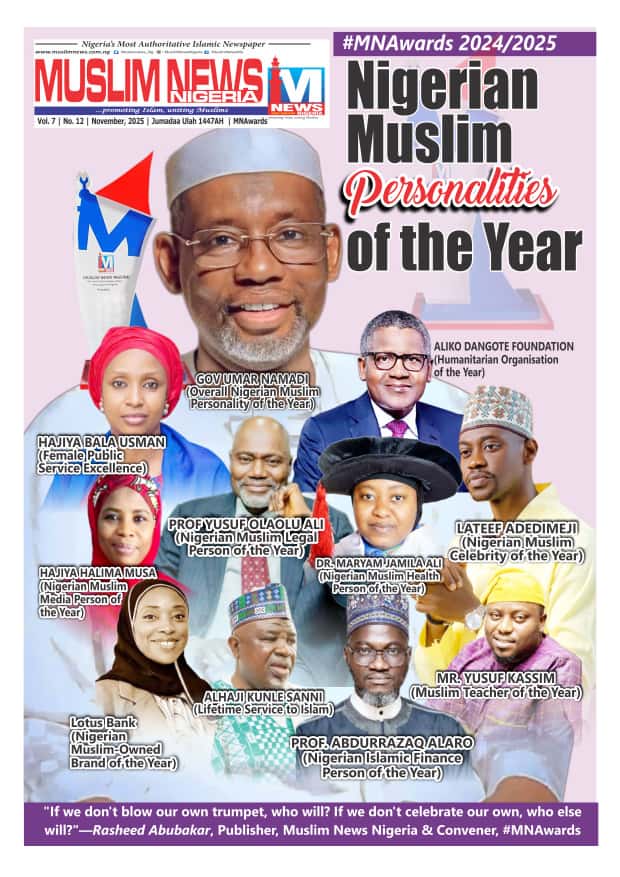
Nigerian Muslim Personalities of the Year 2024/2025
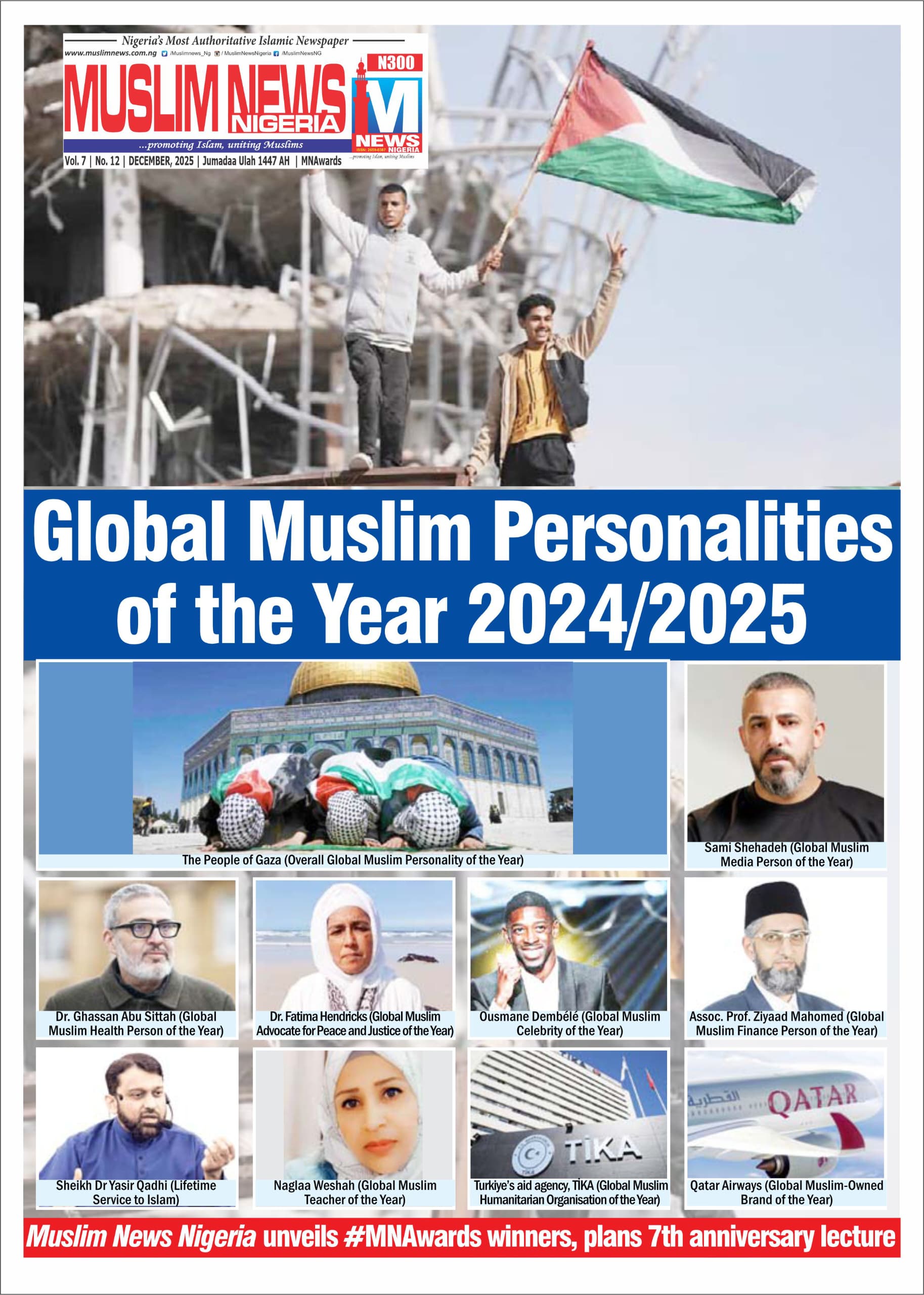
Global Muslim Personalities of the Year 2024/2025



Discover more from Muslim News Nigeria
Subscribe to get the latest posts sent to your email.