

By Rasheed Abubakar
* MUSCOYS chairman says ethnic identity influences Muslims’ voting decisions more than religion
* ’I won’t vote for any presidential candidate in 2027′
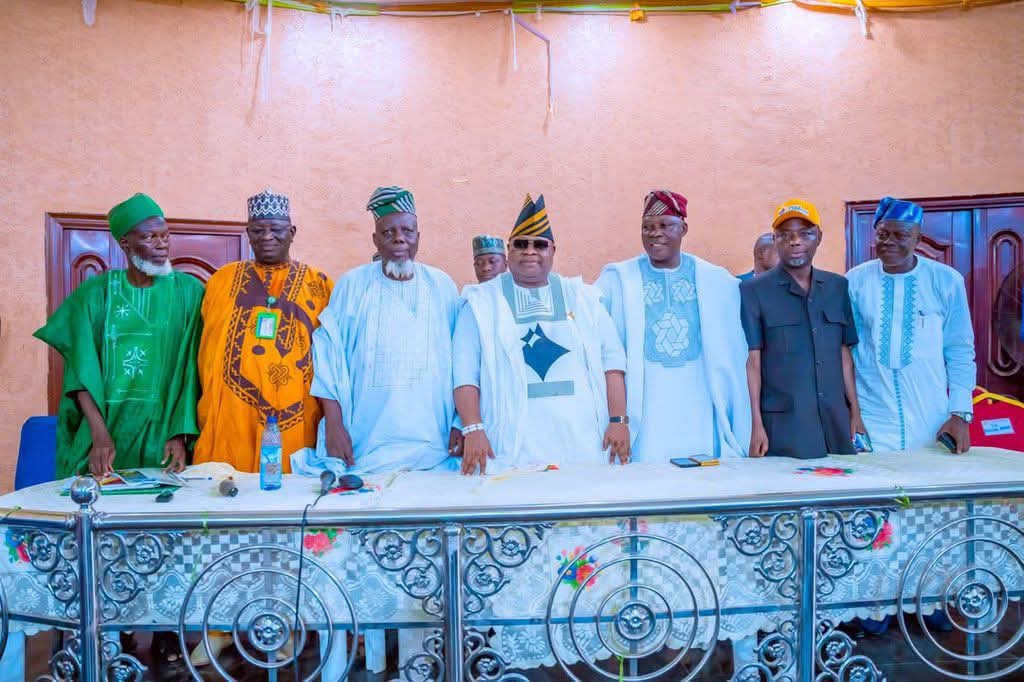
The victory of Osun State Governor ‘Nurudeen’ Ademola Adeleke in Saturday’s governorship election has renewed debate over the influence of religion and ethnicity on voting patterns among Muslims in South-West Nigeria, with the Chairman of the Muslim Community of Oyo State (MUSCOYS), Alhaji Kunle Sanni, arguing that Muslims in the region do not necessarily vote along religious lines.
Adeleke, the candidate of the Accord Party, polled 511,067 votes to defeat his closest challenger, All Progressives Congress (APC) candidate Munirdeen Bola Oyebamiji, popularly known as Ambo, who secured 444,814 votes in the election held on Saturday, August 15, 2026.
Adeleke won in 19 of the state’s 30 local government areas, while Oyebamiji won in 11, with the incumbent governor emerging victorious by a margin of 66,253 votes.
Sanni specifically pointed to Adeleke’s victories in Osogbo, Ede, Iwo and Ikire, areas with significant Muslim populations, as evidence that religious identity alone does not determine how Muslims in the South-West vote, unlike in the North.
“If Muslims in the South-West vote on the basis of religion, the bulk votes of Muslims in Osogbo, Ede, Iwo and Ikire would have catapulted Ambo to the Government House in Osogbo,” Sanni said.
Ethnicity over religion
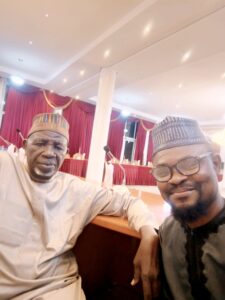
Sanni further observed that ethnic identity often influences the voting decisions of Muslims in the region more strongly than religious affiliation.
“Ede Muslims are aware that Adeleke tilts more to Christianity than Islam, but he is their son,” he said.
The MUCOYS chairman said the voting pattern in Osun demonstrated the complexity of political choices among Muslims in the South-West, where considerations such as ethnicity, family ties, political loyalty and financial inducements could sometimes outweigh religious affiliation.
His comments come as political parties and aspirants begin positioning themselves ahead of the 2027 general elections, with the place of religion, ethnicity and political representation expected to remain major issues among Muslim communities across the South-West.
‘I won’t vote for any presidential candidate’
Turning to the 2027 presidential election, Sanni said he would not vote for any presidential candidate, but would not discourage anyone from supporting President Bola Ahmed Tinubu, who received significant support from Muslim voters, particularly in the South-West, during the 2023 presidential election.
“Me, I will not vote for any presidential candidate but will not discourage anybody from voting for Tinubu,” he said.
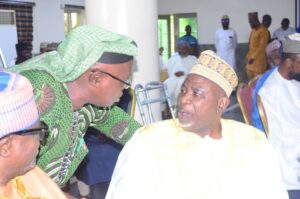
Sanni, however, questioned what alternative Muslims in the South-West would have if they decided not to support Tinubu in 2027.
“So, if Muslims in the South-West refuse to support Tinubu, are we going to support Atiku?” he asked.
According to him, supporting former Vice President Atiku Abubakar would not necessarily guarantee stronger representation for Yoruba Muslims in the Federal Government.
“We are the most vulnerable set of people on earth. If we support Atiku, that will not stop him from saturating his cabinet with Muslims from Hausa/Fulani extraction. He has no choice. He will only put some embellishment of scanty Yoruba Muslims here and there,” Sanni said.
He also criticised Tinubu’s political approach, arguing that the President understood the voting psychology of Nigerians, including the tendency of Muslims in Yorubaland not to vote strictly according to religious identity.
Sanni said this was why, in his assessment, criticism of Tinubu by some Muslim leaders did not necessarily translate into a corresponding electoral backlash.
Money and Muslim political choices
Sanni also raised concerns about the influence of money on political decisions among some Muslim leaders and clerics.
He alleged that some young Muslim clerics in Oyo State recently visited the residence of a Christian political candidate and, after being summoned by the Muslim community leadership, admitted to receiving N20 million from the politician.
“In Oyo State recently, some young Mallams were sighted in the house of a Christian candidate. They are members of the Muslim community, so we summoned them and they confessed of receiving twenty million from the candidate,” he alleged.
Sanni, however, said the Muslim community leadership had not received such an amount during his tenure.
“Since I became Chairman of the Muslim community that will lapse on Sunday, in sha Allah, nobody dead or alive has given us twenty million naira,” he said.
‘We will get it right politically’
Sanni said the political challenges facing Muslims would persist as long as poverty remained widespread and some religious leaders remained vulnerable to financial inducements.
He argued that stronger political consciousness among Muslims would require religious leaders to remain independent and make decisions based on principles rather than monetary considerations.
“The day poverty vanishes considerably and we have Imams that don’t worship money instead of Allah, that is the day we would get it right politically,” he said.
Sponsored
Sponsored

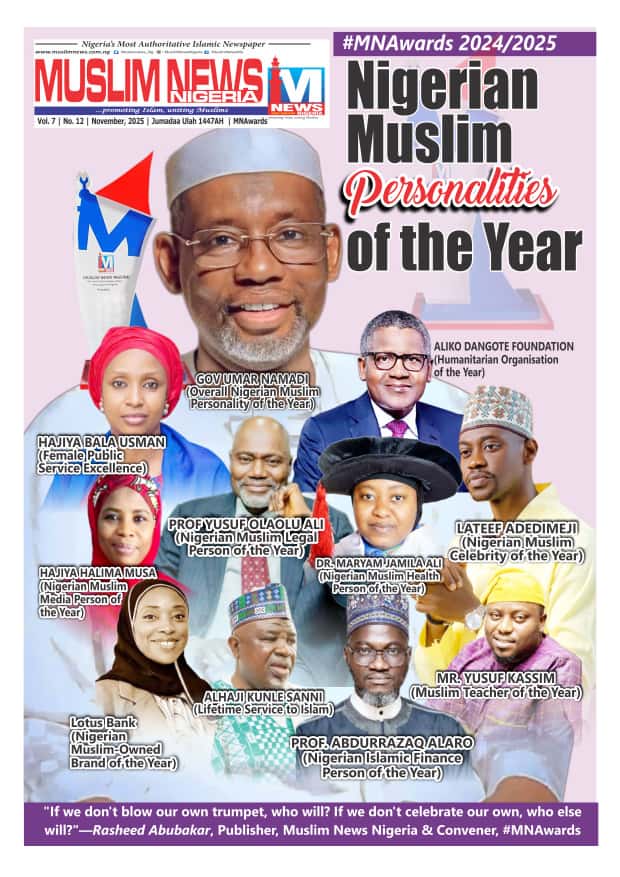
Nigerian Muslim Personalities of the Year 2024/2025
Global Muslim Personalities of the Year 2024/2025




Discover more from Muslim News Nigeria
Subscribe to get the latest posts sent to your email.