

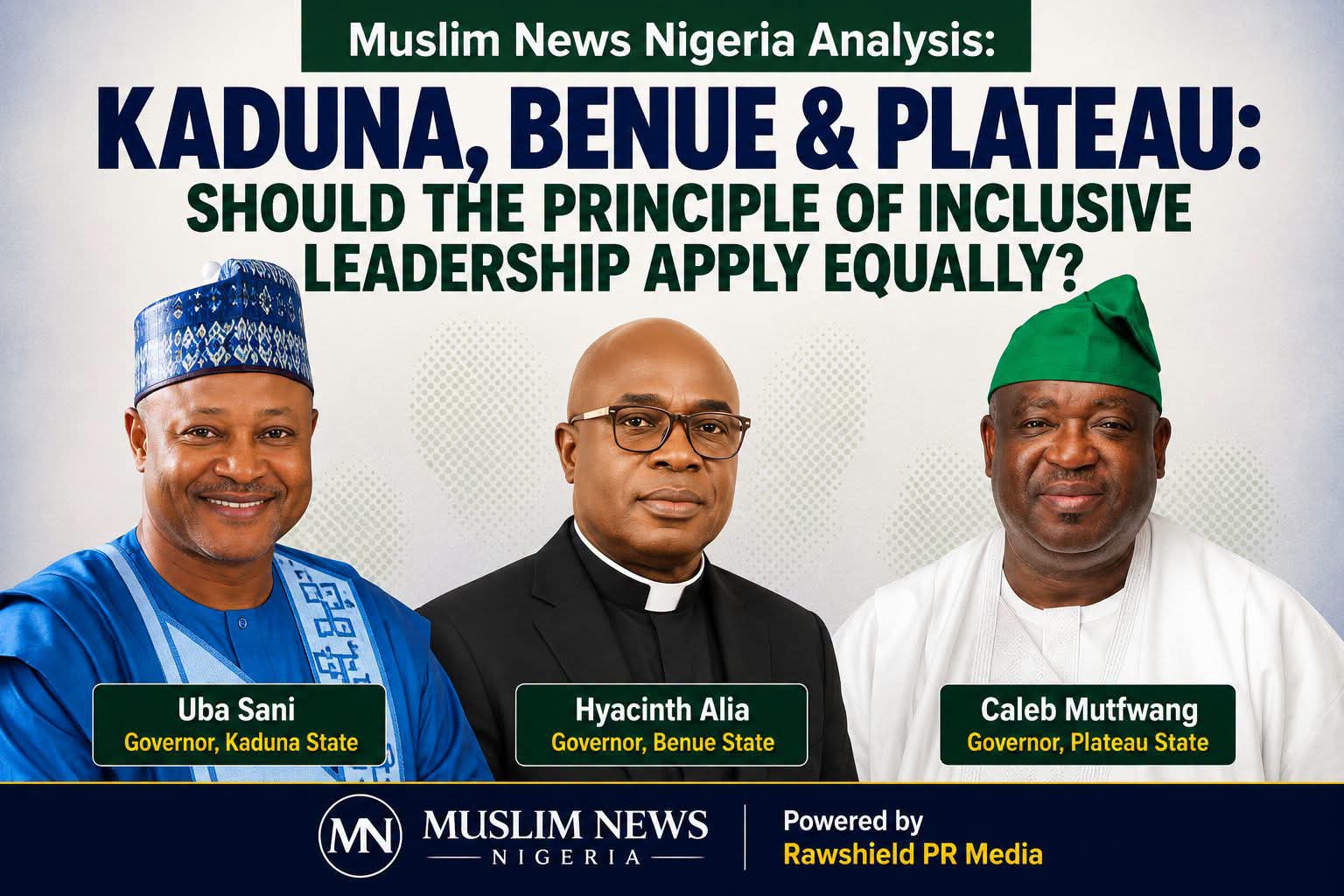
Some media analysts and commentators have been praising Kaduna State Governor Uba Sani for choosing a Christian, Jerry Adams, as his running mate for the 2027 governorship election. Their argument is that Kaduna belongs to all its citizens and that inclusive leadership can strengthen unity and peaceful coexistence, even though Muslims constitute the majority of the state’s population.
If that principle is sound, then it should be applied consistently to Benue and Plateau as well. Benue is led by Governor Hyacinth Alia, an ordained Catholic priest, with Sam Ode, also a Christian, as his deputy and confirmed running mate for the 2027 governorship election. Likewise, Plateau is governed by Governor Caleb Mutfwang and Deputy Governor Josephine Piyo, who are both Christians and are expected to seek re-election on the same ticket.
The comparison between Kaduna, Benue and Plateau is both relevant and appropriate because the three states share a unique history. They are among Nigeria’s most religiously diverse states and have, for decades, grappled with recurring ethno religious violence, communal clashes and insecurity.
Time and again, all three have dominated national headlines over conflicts that have claimed lives, displaced communities and deepened religious mistrust. If inclusive leadership is considered an important ingredient for peace, stability and a sense of belonging in Kaduna, the same principle should be encouraged in Benue and Plateau.
The contrast becomes even more striking when viewed alongside the 2023 elections. At the time, sections of the media gave significant attention to Governor Uba Sani’s decision to retain a Muslim running mate, with many suggesting that a Muslim-Muslim ticket could heighten political and religious tensions in Kaduna. Yet similar concerns were largely absent in Benue and Plateau, where Christian governors chose Christian running mates. In those states, the Christian identity of the deputy governorship candidates attracted far less scrutiny.
Now, three years later, some analysts are applauding Governor Uba Sani for ending Kaduna’s Muslim-Muslim ticket by choosing a Christian running mate. Some even suggest he bowed to public pressure or sought to avoid another round of media criticism. Meanwhile, Benue and Plateau continue with Christian-Christian tickets without attracting comparable calls for religious balancing, despite sharing many of Kaduna’s demographic and security realities.
This raises an important question: Should the principle of inclusive leadership apply only when Muslims hold both offices, or should it apply equally when Christians do the same in similarly diverse states?
The issue is not about opposing Governor Uba Sani’s decision. If anything, his choice is being presented as a model of inclusion. The real question is whether that same standard will now be applied consistently. If religious balance is considered essential for promoting trust, reducing feelings of marginalisation and fostering peaceful coexistence in Kaduna, then fairness demands that analysts and commentators advocate the same approach in Benue and Plateau. Anything less risks creating the perception of a double standard.
Note to commenters: This discussion is deliberately limited to Kaduna, Benue and Plateau because they share similar histories of ethno religious conflict, religious diversity and recurring communal violence. It is not a comparison with many states in the far North, where Muslims constitute an overwhelming majority and Muslim-Muslim tickets are common, or with most states in the South-South and South-East, where Christians form an overwhelming majority and Christian Christian tickets are commonplace. The comparison is confined to these three Middle Belt states because they share similar demographic realities and longstanding ethno-religious tensions.
– Rasheed Abubakar is the Publisher of Muslim News Nigeria. Email: muslimnewsng@gmail.com
Sponsored
Sponsored

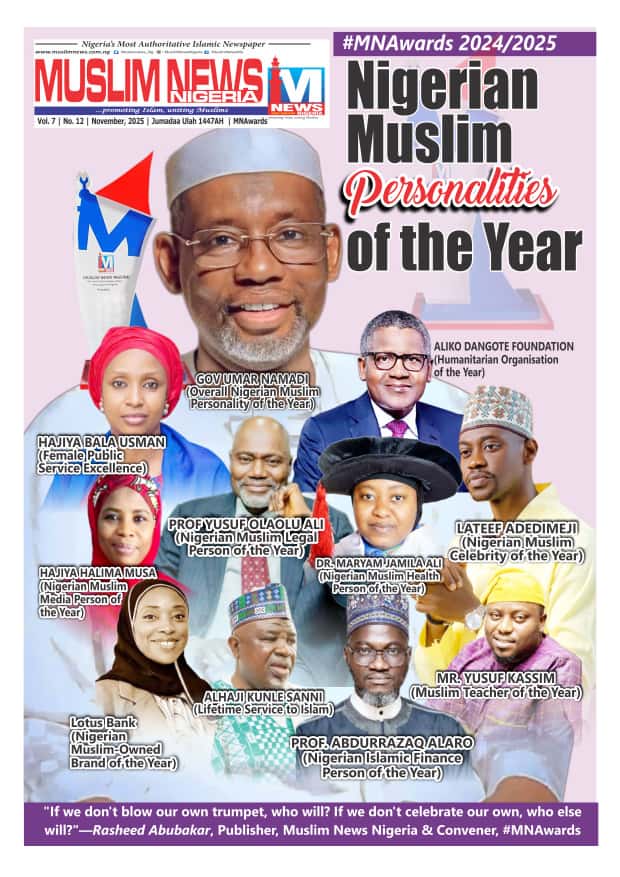
Nigerian Muslim Personalities of the Year 2024/2025
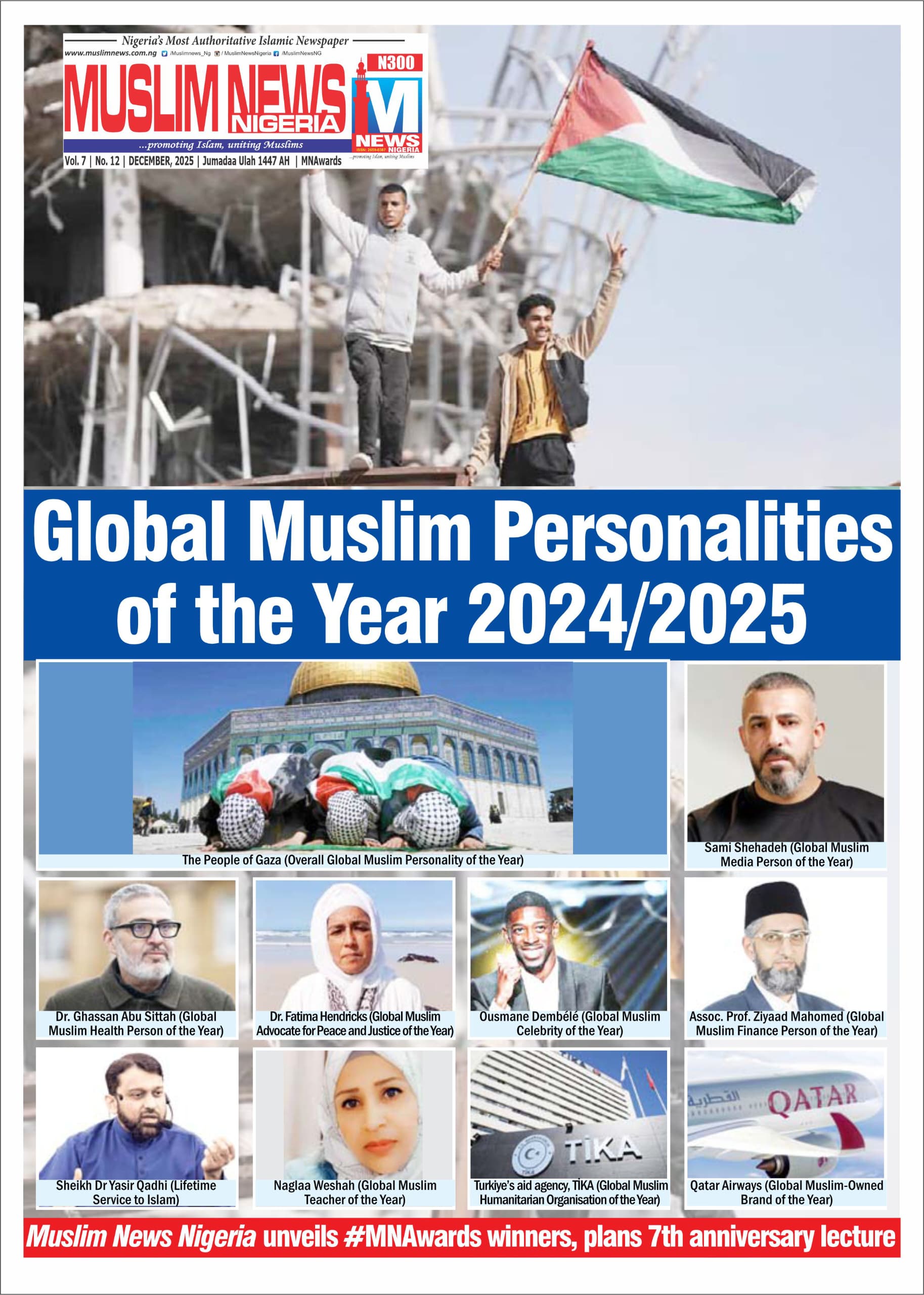
Global Muslim Personalities of the Year 2024/2025



Discover more from Muslim News Nigeria
Subscribe to get the latest posts sent to your email.